
Somatic Therapy NYC
What Your Body Already Knows
THE STORY YOUR BODY KEEPS TELLING
You're moving through your day the way you're used to.
But your body is carrying something else.
Your jaw tightens. There's a pit in your stomach. A lump in your throat.
You might already understand where some of this comes from.
But understanding it hasn't changed how it feels in your body.
That's where somatic therapy starts.

WHAT SOMATIC THERAPY ACTUALLY DOES
Talking about something and feeling it in your body are two very different things. Lasting change happens through new experiences, not just new insights.
Somatic therapy helps you:
Tune into what your body is actually telling you, not just your thoughts about it
Build the capacity to actually take in good experiences, not just survive the hard ones
Feel more present and less at the mercy of your own reactions
Complete what got left unfinished in your nervous system
Access a steadiness in yourself that thinking alone can't reach
Your body has been trying to tell you something for a long time. This is how you finally listen.
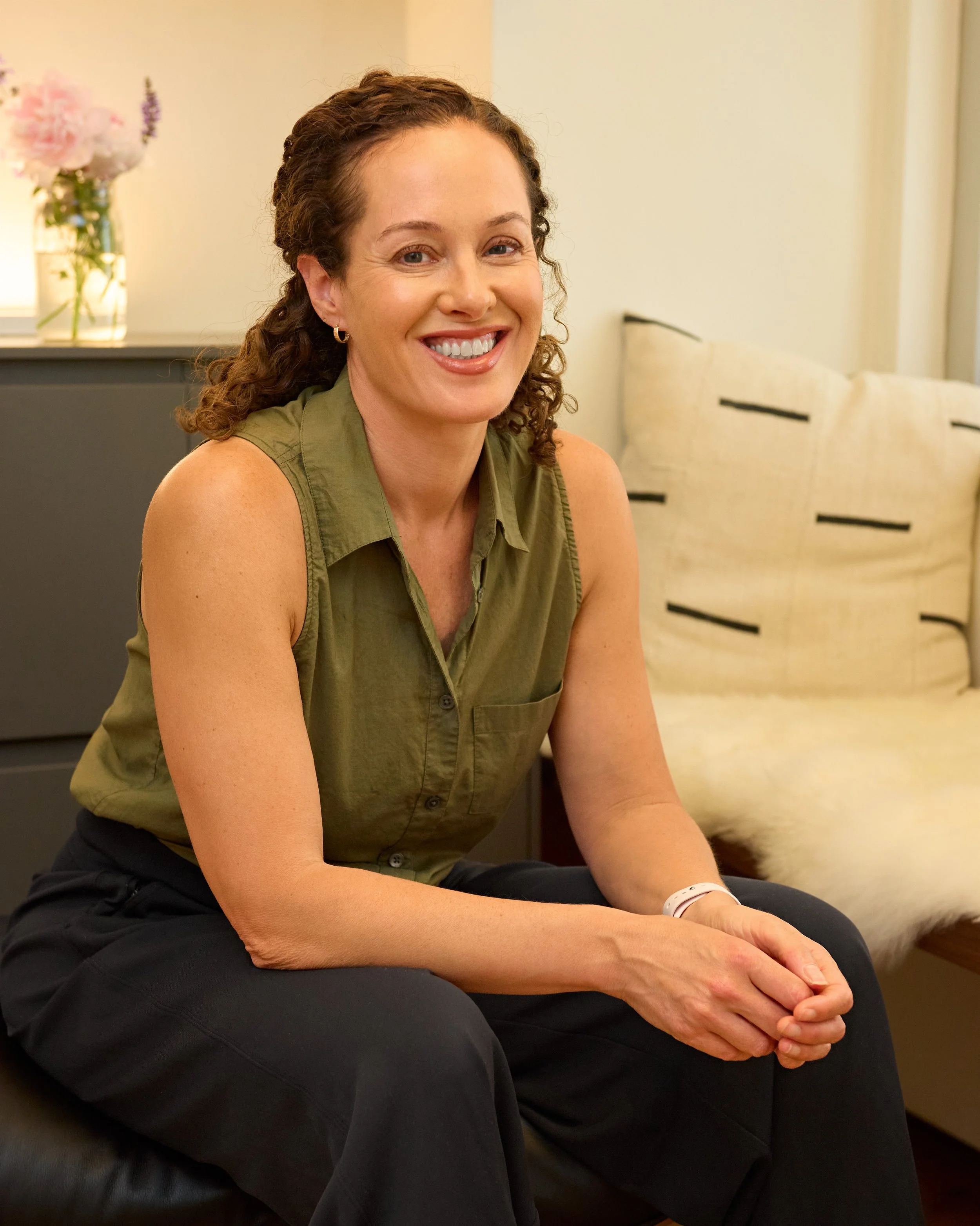
I’m Hilary, a Somatic Therapist in New York
Most people who come to somatic therapy have spent years managing from the neck up.
They may be articulate about what's happening but feel stuck in it.
I'm a Licensed Clinical Social Worker with over 25 years of experience working with adults in New York City, with advanced training in Sensorimotor Psychotherapy, a body-based approach grounded in neuroscience and attachment research. Somatic work is woven into how I listen and what I notice. Sometimes that looks like catching the moment right after good news lands, before the what-ifs move in, and slowing it down so your brain and body actually get to register it. That might sound small. It isn't.
If you're curious, we can start with a conversation.
Frequently Asked Questions about Somatic Therapy in New York City
-
Somatic therapy works with the body as part of the therapeutic process, not just the mind. The premise is that stress, trauma, and emotional patterns don't only live in your thoughts. They live in your nervous system, your posture, the tension you hold without knowing you're holding it. Talking about something can be useful. Noticing how it shows up in your body gets at something different. And the repetition matters here too, repeated experiences of regulation and safety actually retrain the nervous system over time. That's not just a feeling. It's a change in how the body responds.
-
Sensorimotor Psychotherapy is a body-based approach developed specifically for trauma and attachment. It combines talk therapy with direct attention to what's happening physically, sensation, posture, movement, the things that show up in the body before words do. I have advanced training in this approach and it's a core part of how I work.
-
No. Sessions are conversational and we move at your pace. I might slow things down at a particular moment and ask you to notice what's happening physically, but that's woven into the conversation, not separate from it. You're not going to spend 45 minutes scanning your body. It's more that we pay attention to what comes up naturally and follow it when it's useful.
-
Somatic therapy can be especially helpful for anxiety, chronic stress, emotional overwhelm, trauma-related symptoms, and the feeling of being constantly “on” or unable to fully relax. It may also support people who notice tension held in the body, emotional reactivity, difficulty slowing down, feeling disconnected from themselves, or struggling to fully enjoy life even when things seem fine on the outside.
-
Every session is different depending on what you're bringing in. We talk, and at moments that seem important I might slow things down and ask what you're noticing in your body right now. Mindfulness is a big part of this, not as a relaxation technique but as a way of creating real change. Paying attention to what's happening in your body, again and again, actually rewires how your nervous system responds over time. I'm not going to ask you to lie on a mat or do anything that feels clinical or strange. It's more like learning to pay attention to a layer of yourself that usually gets ignored.
-
No. The focus is on helping your system feel safer in the present. We work at a pace that supports regulation, not overwhelm, so you can process experiences without feeling flooded.
-
It depends on what you're dealing with and how long it's been there. There's no standard timeline. Some things move faster than you'd expect. Others take longer because the patterns are older or more layered. It's worth talking about in a consultation.
-
Yes. Somatic therapy is often used to support people who have experienced trauma, including experiences that may not feel “big enough” to name but still live in the body. Trauma can show up as ongoing tension, reactivity, shutdown, or a sense of being on edge.
This work focuses on helping your nervous system feel safer in the present. Rather than reliving what happened, we move at a pace that allows your body to process and release patterns of holding over time, so you can feel more settled, less reactive, and more in control of your responses.

When Your Body Finally Gets To Speak
Somatic therapy brings the rest of you into the room. Not to revisit everything, but to stop carrying it the same way.
Rooted. Present. Fully Yourself.
You've been holding it together. This is what comes after that.