
IFS Therapy for People Who Don’t Like “Woo-Woo” or Visualization: A Grounded, Practical Approach to IFS Therapy NYC
You might have heard about IFS and immediately thought, this is not for me.
Maybe you picture closing your eyes, imagining scenes, talking to parts in a way that feels abstract or a little too out there. Maybe you’ve tried something like that before and it didn’t click. Or maybe you’re someone who prefers things to feel concrete, logical, and grounded in real experience.
Ethan felt this way when he first reached out. He described himself as practical, analytical, not someone who “does visualization.” He wasn’t against therapy, but he was skeptical of anything that felt too intangible.
What he did want was relief from the constant pressure he felt internally. The overthinking. The second-guessing. The sense that no matter what he did, something in him was always evaluating, pushing, or questioning.
A quick note before we go further. Ethan is not a real client. His story is an amalgamation of experiences I see often in my work.
When Therapy Feels Too Abstract
One of the biggest misconceptions about IFS Therapy NYC is that it requires a certain kind of imagination or openness to visualization.
For many people, that assumption becomes a barrier before they even start.
Ethan told me early on, “If this is about closing my eyes and picturing things, I don’t think I can do it.”
And the truth is, you don’t have to.
IFS is not about forcing yourself into a particular experience. It is about paying attention to what is already happening inside you in a way that feels natural and accessible.
For some people, that includes images. For others, it is much more straightforward.
Understanding Parts In A Grounded Way
When we talk about “parts” in IFS Therapy, we are not asking you to imagine something that is not there.
We are putting language to something you likely already notice.
The part of you that overthinks.
The part that pushes you to get everything right.
The part that wants to shut things down or avoid.
Ethan immediately recognized this.
He didn’t need to visualize anything. He could describe, in very concrete terms, how one part of him would analyze every conversation after it happened, while another part just wanted to disengage completely.
Once we framed it this way, it stopped feeling abstract and started feeling accurate.
Why One May Feel Skeptical At First
If you are someone who values logic and clarity, it makes sense that anything that feels “woo-woo” might create resistance.
Often, there is a part of you that is protective of that. It wants to make sure you are not wasting time, not getting pulled into something that does not feel real or effective.
In Ethan’s case, there was a part that stayed slightly on guard in the beginning. It questioned the process. It wanted proof that this would actually help.
Instead of trying to push that part away, we included it.
We got curious about what it needed in order to feel more comfortable. What would help it trust the process.
Ironically, that part became an important ally once it felt understood.
What IFS Therapy Actually Looks Like In Practice
In sessions, the work is often much more conversational than people expect.
You might notice a moment where you feel stuck, tense, or reactive. We slow that moment down together.
We might ask:
What is coming up for you right now
Where do you feel that in your body
What does that part seem concerned about
There is no requirement to see images or create anything in your mind.
For Ethan, it often looked like describing what he noticed in real time. A tightening in his chest when he felt judged. A familiar internal voice that pushed him to say the “right” thing.
From there, we worked on creating a little space between him and those reactions.
Over time, that space made room for something new.
Building Self-Trust Without Forcing It
Ethan came into therapy wanting to feel more in control of his thoughts.
What he found instead was a different kind of control. One rooted in self-trust.
Instead of trying to shut down the part of him that overanalyzed everything, he learned how to relate to it differently.
He could notice it without immediately believing it. He could understand what it was trying to protect him from. And he could choose how much he wanted to follow it.
That shift did not happen through visualization or anything that felt unnatural to him.
It happened through paying attention, getting curious, and building a more grounded relationship with himself.
Who This Approach Is For
IFS Therapy NYC can be a good fit if you:
Prefer a grounded, practical approach to therapy
Feel skeptical of visualization or abstract techniques
Notice different “parts” of yourself in everyday life
Want to understand your patterns without pathologizing them
You do not need to be a certain kind of person for this work to help.
You do not need to “buy into” anything that does not feel real to you.
You just need a willingness to notice what is already there.
What This Means For You
If you have been hesitant about IFS because it feels too “out there,” that hesitation actually makes sense.
Often, it comes from a part of you that values clarity, effectiveness, and staying grounded.
That part does not need to go anywhere.
In IFS Therapy NYC, we make room for that part too.
Because the goal is not to change who you are.
It is to help you understand yourself in a way that feels real, usable, and sustainable.
And from that place, things begin to shift. Not in a way that feels forced, but in a way that feels like you are finally working with yourself instead of against yourself.
Author Bio
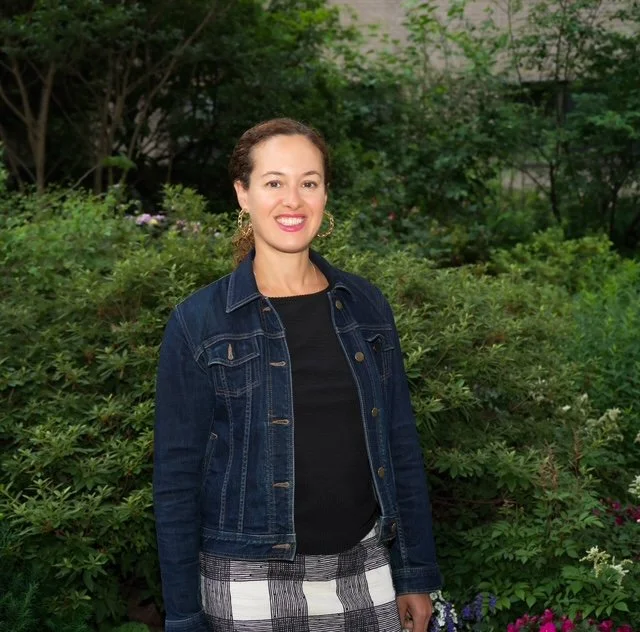
Hilary Kopple, LCSW, is an IFS Therapist in NYC
Hilary Kopple, LCSW, is a trauma- informed psychotherapist in New York City specializing in anxiety, emotional overwhelm, relationship patterns, and life transitions. She is an IFS therapist in NYC, incorporating somatic awareness, CBT, and ACT into a warm, grounded, evidence-based approach. Hilary helps adults slow down, reconnect with themselves, and create meaningful inner change rooted in self leadership.
To learn more or get started, visit her Home page.
Read more about her background on her About page.